

Home
For centuries, organisations have been human only. AI agents bring the first non-human workers, introducing a new paradigm: the Human-Agent Organisation ©. Enter it with confidence with the skills and controls you will need.
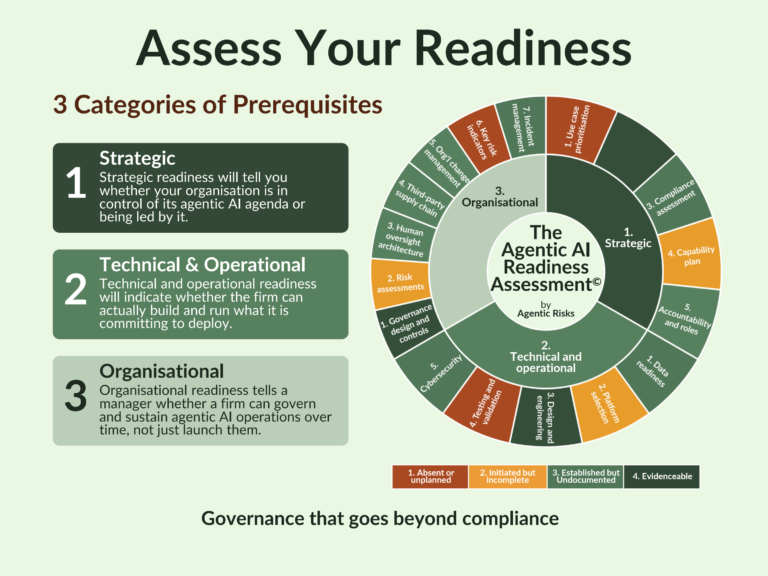
Take the Agentic AI Readiness Assessment now.
“Agentic Risks is a rare source of quality content on agentic AI. Their work has made a fundamental contribution to our understanding of the topic and to how we’ve structured our governance programme. The level of detail, the quality of their approach and the way they communicate it have been extremely valuable.”
AI Agents Are Not “Just Another AI Model” – as gen AI produces outputs for our review, agentic AI creates outcomes in our names. Agents can plan, invoke tools, take actions, interact with their environment, and adapt their behaviour for the future.
New risk class – autonomous agents acting in your name create a broad new category of risk that traditional AI governance – designed for static outputs under human review – does not address. Anthropic has called it too.
Real, unfamiliar damage – agentic risks can often be unclear and cause harm that not even some providers anticipated. Evidence of this reaches the news weekly.
Why now – technology platforms are making agents easily available. Firms face pressure from staff and investors to move fast. Yet, adopting agentic AI before you can control it will give you risk, not advantage.
Why firms need outside assistance – a competitive advantage built on agentic AI is only durable if you can govern it safely. However, laws or not, foreseeable, preventable risks cause financial, reputational, and strategic damage. Redesigning governance for AI agents is a specialist task, and it is what we do.
We have decades of experience in the international investment industry and access to its beating heart through our active membership of the Investment Association. As a result, we began with agentic AI risk consulting services for asset managers aiming to improve productivity through agentic AI.
Our associations with the Institute of Risk Management and other industry bodies created demand from other sectors, so we now also serve accountancies and law firms, which have similar agentic goals and problems as investment firms.
Many are preparing to deploy agents and want to assess their readiness, be clear about what they are aiming to achieve, and have a safe path to success. Others have already deployed agents and want peace of mind that they have the risks under control, evidence of their oversight and, if necessary, support for any remediation.
We serve both regulated jurisdictions – where AI laws require formal risk management – and less regulated countries – where firms must rely on effective risk management for operational safety.
We help firms overcome this in two moves:
Here is our 5-step process for kick-starting your agentic transformation:
Agentic AI risk consulting helps organisations identify, assess, and govern the risks created by autonomous AI agents – AI systems that can take multi-step actions, interact with external tools and systems, and make decisions without continuous human oversight. It is distinct from general AI consulting because agentic systems create unfamiliar risk categories that traditional AI governance frameworks were not designed to address.
Traditional AI governance was designed for static models that produce outputs for humans to review before any action is taken. AI agents operate differently: they act autonomously across systems, accumulate memory across sessions, and can trigger real-world consequences. This changes how risk emerges, how controls fail, and where accountability must sit – none of which existing frameworks were built to handle.
Any organisation deploying or planning to deploy AI agents in regulated workflows will need agentic AI risk governance, which is a specialist task. The need is acute for mid-sized asset managers, where the combination of regulatory scrutiny, fiduciary duty, and pressure to adopt AI quickly creates significant governance risks. However, the risks apply across any sector where agents operate with meaningful autonomy.
Regulatory compliance sets a legal minimum. Agentic AI governance goes further: it identifies and manages foreseeable, preventable risks that regulations do not yet fully address, produces defensible evidence of oversight for boards and auditors, and ensures that autonomous agent behaviour stays aligned with your firm’s risk appetite. Compliance tells you what you must not do; governance tells you how to operate safely within what is permitted.
Readiness assessment covers three domains: strategic (clarity on use cases, risk appetite, and adoption strategy), technical and operational (infrastructure, data quality, integration capability, and monitoring), and organisational (accountability structures, training, and change management). Firms whose adoption strategies succeed are those whose roadmaps are grounded in an honest view of their current state across all three.
A risk-based approach means prioritising use cases by the level of risk they carry, applying governance prerequisites proportionately – so lower-risk workflows require fewer controls – and building a roadmap from your actual readiness state rather than an idealised one. It contrasts with permissive access (deploy first, monitor after) and full pre-approval (require all controls before any deployment), sitting between them as the approach that enables progress without sacrificing oversight.
Boards and regulators increasingly expect firms to demonstrate that they have identified the material risks created by autonomous agents, that proportionate controls are in place and tested, that human oversight mechanisms are documented, and that there is a clear accountability structure for AI-related decisions. In the EU regulated jurisdictions, this expectation is being formalised through AI-specific legislation; in less regulated markets across EMEA, the evidential standard is set by best practice and fiduciary duty.
Platform-native governance tools are designed to support deployment, not independent oversight. They cannot provide the objective verification of control effectiveness that boards, auditors, and regulators require – and they create dependency on a vendor whose commercial interests may not align with yours. Independent governance, built on a framework not tied to any platform, gives firms the ability to assess, challenge, and evidence their agentic AI risk management without those conflicts.
We use some cookies - read more in our policies below.
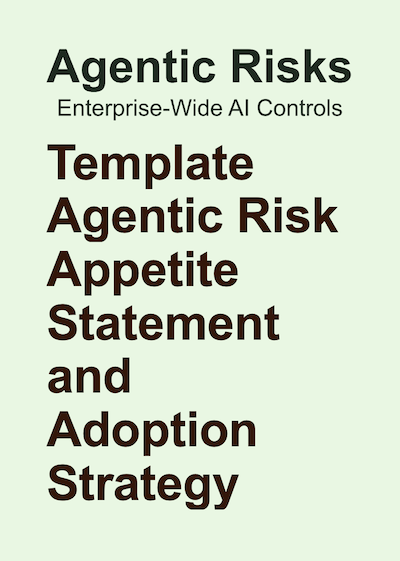
Fill in this form and get access to our
Template Agentic Risk Appetite and Adoption Strategy for free
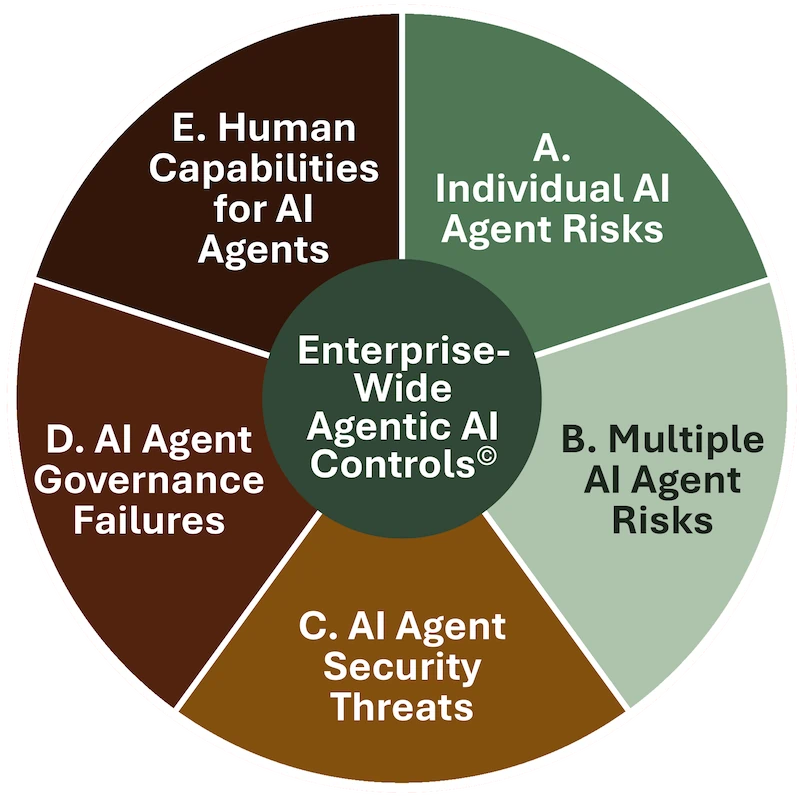
Fill in this form and get access to the
Enterprise-Wide Agentic AI Risk Control Framework.

Fill in this form and stay up to date